
Case study · My own product · 2026
Simply Steady: from first research to first sale in 25 days
Before I offer my go-to-market process to clients, I'm running it on my own business first. Simply Steady is case study one: a daily check-in app and printable sheets for women who keep falling into the all-or-nothing cycle with movement.
- 25 daysfrom the first validation run (Oct 9) to the first sale (Nov 3)
- 107 checksautomated tests the app passes before every release
- 0 manual stepsfrom a social post to checkout, delivery, and follow-up
The problem
Many women start a movement routine, miss a few days, feel ashamed, and quit. Most fitness apps make that cycle worse, with streaks and counts that punish a gap.
I also had a second question, as a founder. Shiftt Perspective promises clients a process that goes from research to a running business. I wanted proof that the process works before selling it, so I ran it on a product of my own, in public.
How I found the real need
I didn't start with an app idea. I started with a research process I built with Claude Code. It collects buyers' own words through official platform tools, like YouTube comments and Etsy reviews, plus a quick copy and paste for sites without one. Every review and comment was coded, with no usernames kept.
- 71 mentions across 16 sourcesThe top gap was something simple, short, and gentle. "10 minutes" came up again and again.
- A way back, without starting overThe second gap. The barrier was perfectionism, not a lack of fitness knowledge.
- An honest ceiling checkOne low-priced product alone was unlikely to reach $3,000 a month, so I planned a small suite of products instead of one big bet.
Decision on October 13: go to a small test. The big idea behind it is that consistency is about emotional regulation, not discipline.
How I weigh evidence
- Interest: searches, views, follows
- Buyers' own words
- People asking for an offer
- Public signs of payment
- My own sales
What I designed
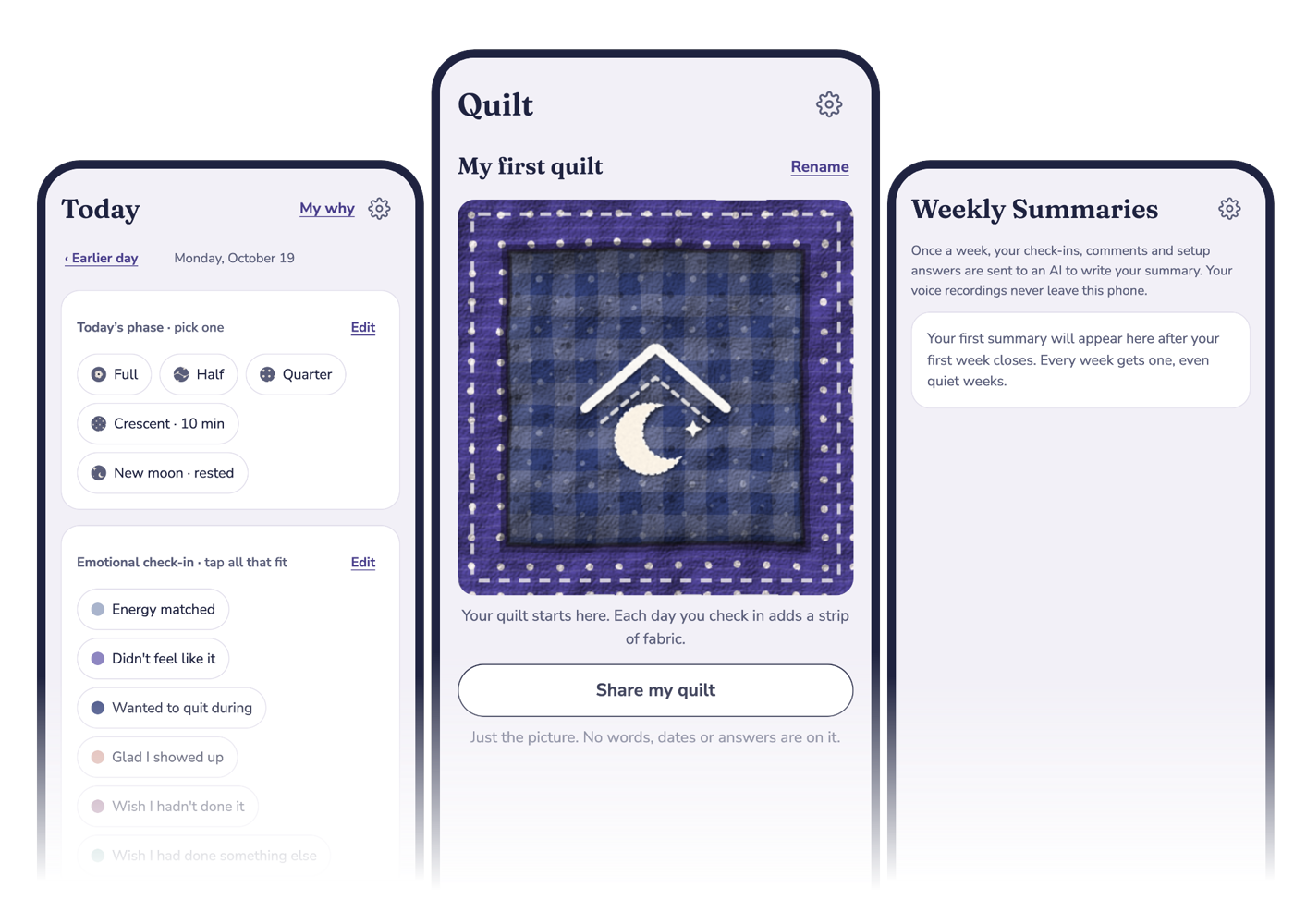
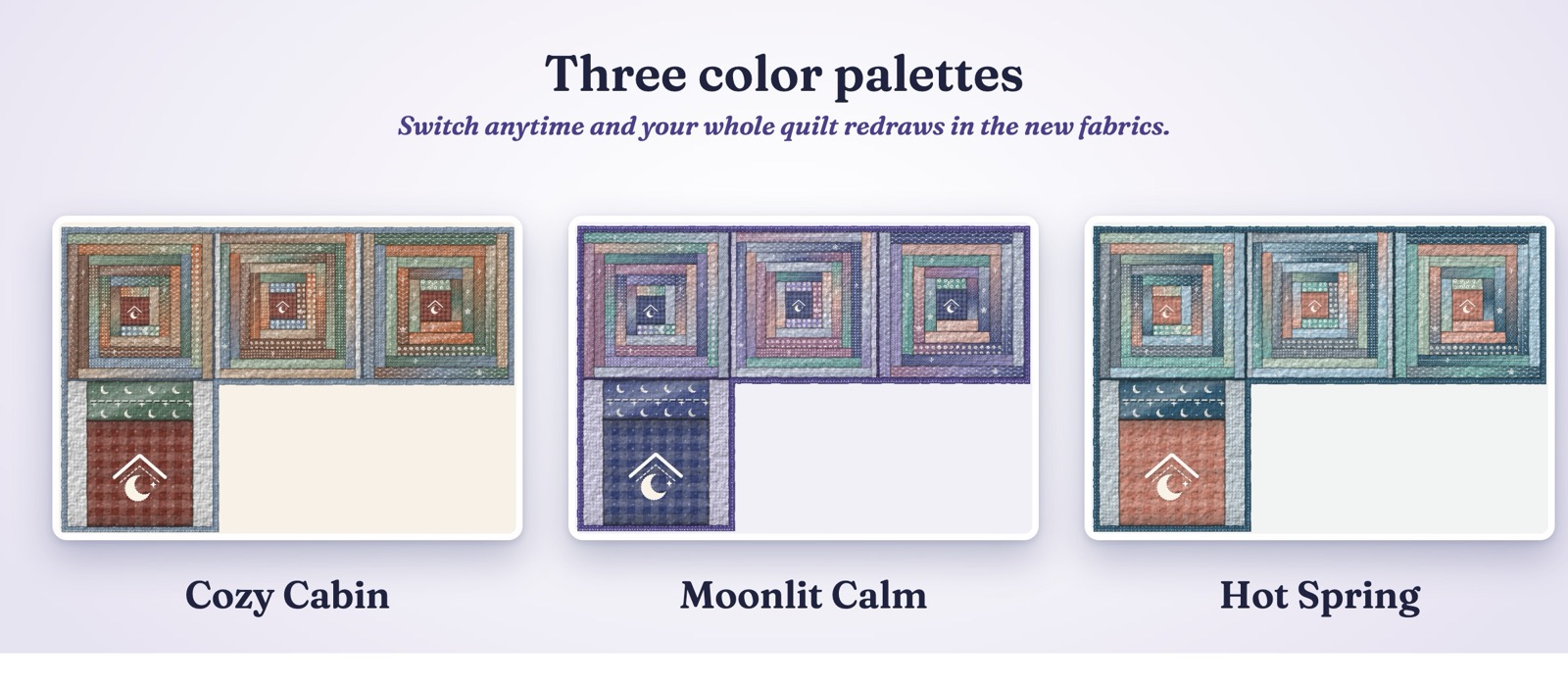
Every check-in adds a strip of fabric to a quilt. Rest days count. Missed days leave no gaps and no punishment. Over weeks, the quilt shows a pattern without ever turning it into a score.
- No streaks or day countsAny check-in counts as consistency.
- Private by designCheck-ins are stored only on the phone, voice reflections never leave it, and the AI summary is optional.
- Built for every phoneTap targets of at least 44px, and nothing breaks at 320px wide.
A small AI model writes a kind weekly summary. I refined its rules through 10 rounds of sample summaries until the tone was right: no day counts, no advice, no "we," and every check-in treated as a positive. A safety check asks for a rewrite if a draft breaks a rule, and people can turn the AI off entirely.
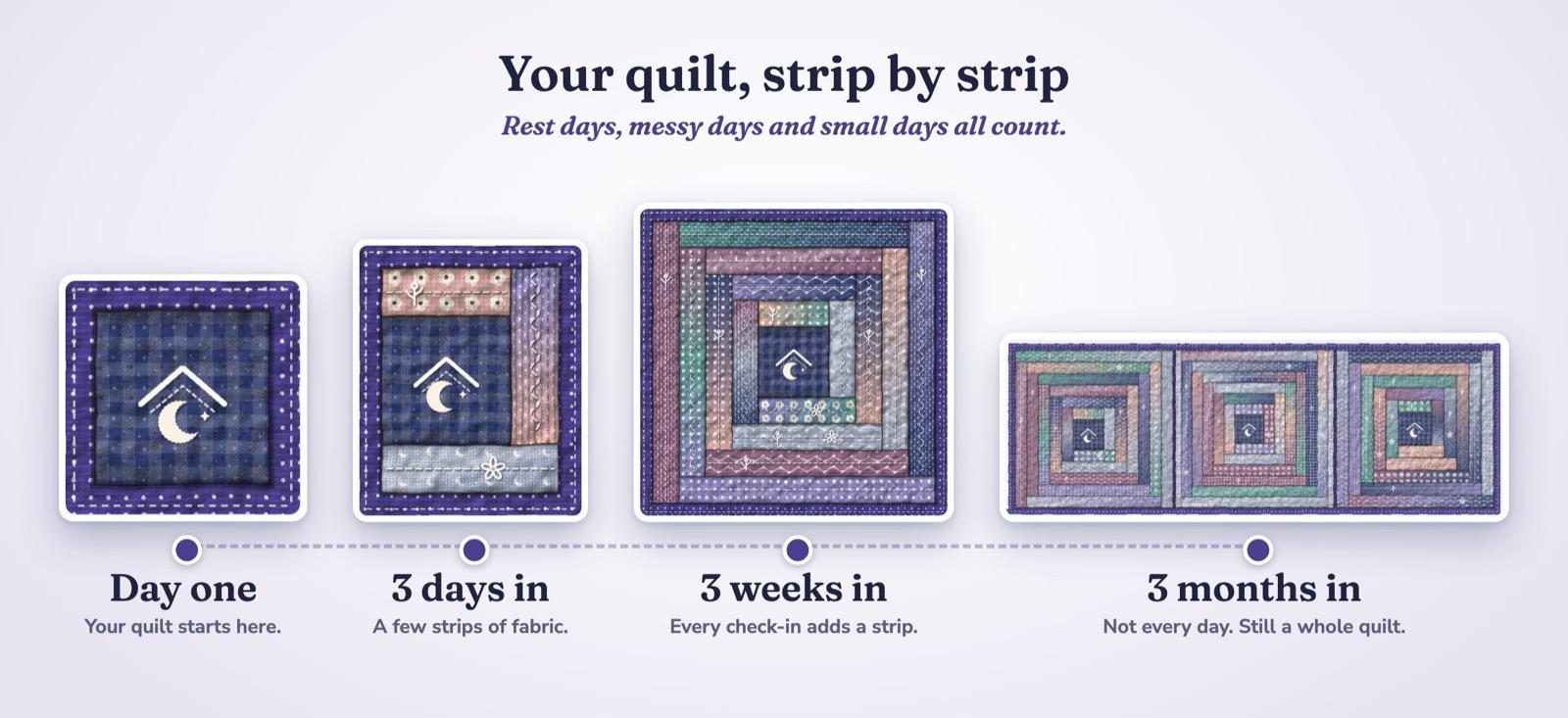
What I built
This is the go-to-market engineering half of the work: the path a buyer takes from a video to a delivered product, with no manual steps.
- Video
- Keyword reply with a link
- Counted link
- Sales page
- Checkout
- Delivery email
- Sale alert
- Order pipeline
- Feedback request on day 7
- A sales page, checkout, policies, and delivery emails in Go High Level, with Stripe payments.
- Instagram and TikTok keyword replies that send the link automatically.
- Share links counted by source on a Cloudflare Worker, keeping no personal data.
- An access system that ties each purchase to one device.
- Founding-member pricing that steps from $4 to $9, $14, and $17, stated once and calmly.
- A tracking plan and a weekly numbers dashboard.
Results so far
- The printable check-in sheets launched on November 1, 2026. The first sale came two days later.
- The first two videos reached 342 views by the next morning.
- I tracked 77 hours of build and launch work from October 19 to November 3.
- The app is built and passed 42 launch checks on both test phones. It is in final launch testing now.
With fewer than 10 buyers, any rate is an early hint. My first one to three months of sales will become my benchmarks.
What I learned
- Research first, problem secondMy first run asked for a problem statement before any research. That was backwards, so now the problem comes out of the research.
- Launch the smallest product firstSelling $3 printables before the app was finished let me test the whole path to purchase with real buyers.
- Write the rules downBrand voice, privacy, and tone rules live in files my AI partner reads every time, so quality doesn't depend on memory or energy.
This is the same process I use with clients: research, positioning, design, build, launch, and measure.